
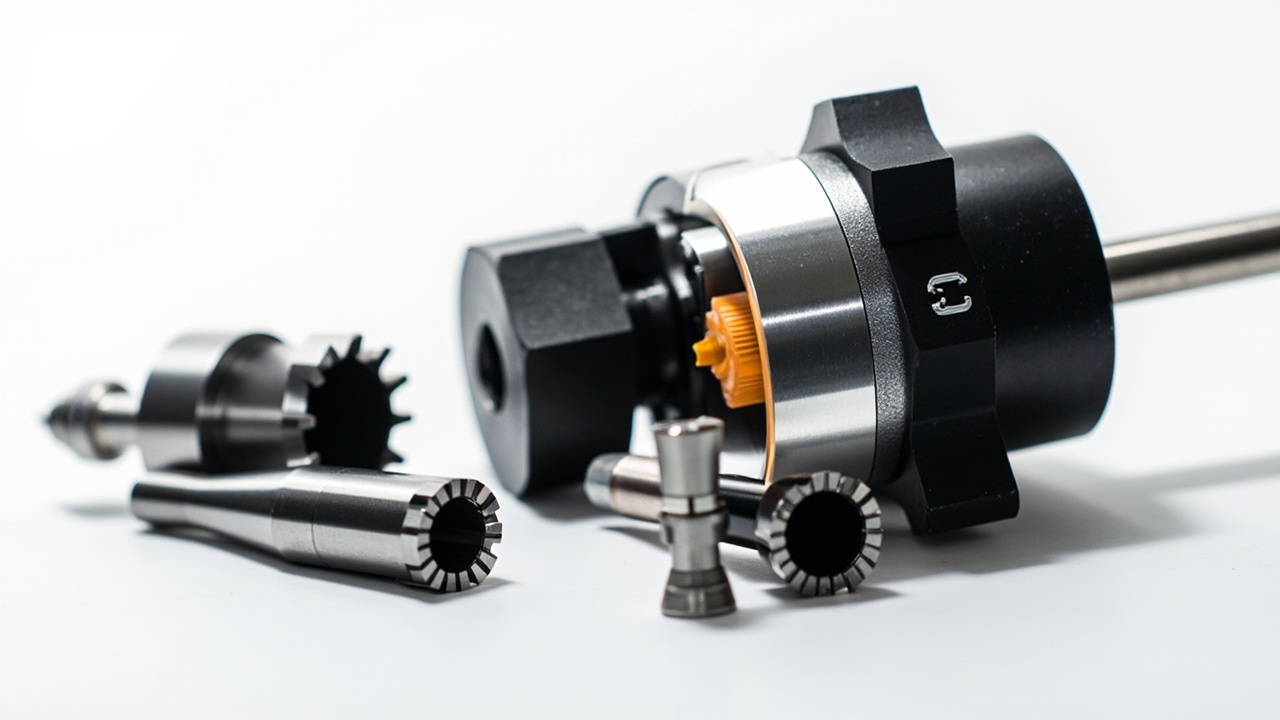
When selecting a TAIG Tools (Chandler, Arizona) micro lathe, a critical decision is whether to opt for a 5C or ER16 spindle, as each offers distinct advantages for workholding.
The choice hinges on the size and type of material you plan to machine, as well as the precision and versatility required for your projects.
Key Takeaways
- 5C collets provide superior gripping force and accuracy for larger diameter workpieces, up to 1.0625 inches, making them ideal for heavy-duty turning.
- ER16 collets offer greater versatility for smaller parts, accommodating a wider range of diameters with a single collet set, up to 3/8 inch.
- TAIG Micro Lathe II models are available with both ER16 and 5C spindle options, allowing machinists to select the best fit for their applications.
- Existing TAIG lathe owners can often upgrade their machines to a different spindle type, enhancing their lathe's capabilities for new projects.
- Understanding the trade-offs in collet capacity, setup time, and cost is essential for making an informed decision for your workshop.
Choosing the right workholding system for your lathe is fundamental to achieving precise and efficient machining operations. For TAIG micro lathes, the primary options for collet-ready spindles are 5C and ER16. Both systems excel in different scenarios, and understanding their characteristics will help you select the best fit for your specific needs, whether you are a hobbyist, a knife maker, or running a small prototyping shop. This guide will explore the features, benefits, and trade-offs of each spindle type, helping you make an informed decision for your TAIG Micro Lathe II or TAIGTurn lathe.
What are 5C Collets and When Should You Use Them?
5C collets are a widely recognized standard in machining, known for their robust gripping power and high precision. They are single-angle collets, meaning they grip the workpiece along a single taper, providing excellent concentricity and holding force. This design makes them particularly well-suited for demanding turning operations where workpiece stability is paramount.
The primary advantage of 5C collets lies in their capacity. They can typically hold round stock up to 1.0625 inches (1-1/16 inches) in diameter, making them suitable for machining larger parts than ER16 collets. This larger capacity is beneficial for projects involving thicker bar stock or components that require significant material removal. For example, if you are turning custom bushings, shafts, or intricate clock parts from larger stock, a 5C spindle offers the necessary rigidity and holding power.
However, 5C collets are not without their considerations. Each 5C collet is designed for a specific diameter, often in 1/64-inch increments. This means you need a larger set of collets to cover a wide range of workpiece sizes, which can increase initial investment and storage requirements. Changing between different diameter collets also takes slightly more time compared to ER collets, as each collet is a distinct component.
Despite this, for machinists who frequently work with specific, larger diameters and prioritize maximum grip, the 5C system is often the preferred choice. The TAIG M1015-5C Micro Lathe II, priced at $990, is an example of a machine built to leverage the strengths of the 5C system, offering a robust foundation for precision work.
What are ER16 Collets and Why Are They a Good Choice?
ER16 collets are part of the popular ER collet system, which is known for its versatility and wide clamping range. Unlike 5C collets, ER collets are multi-angle, meaning they grip the workpiece along multiple tapers. This design allows each collet to clamp a small range of diameters, typically around 0.039 inches (1mm), rather than a single specific size.
The main benefit of ER16 collets is their flexibility. A single ER16 collet set can cover a broad spectrum of workpiece diameters, reducing the number of individual collets needed. For the TAIG Micro Lathe II, the maximum ER16 collet diameter is 3/8 inch. This makes them highly convenient for machinists who work with a variety of smaller parts and frequently switch between different stock sizes.
For instance, if you are crafting small jewelry components, intricate model parts, or delicate prototypes, the ER16 system provides quick and easy workholding changes. The 1040 ER16 Collet Set, available for $65.20, offers a cost-effective way to acquire a range of sizes for your lathe.
While ER16 collets offer excellent concentricity, their gripping force, especially at the extremes of their clamping range, may not be as robust as a perfectly sized 5C collet for very heavy cuts. However, for the typical operations performed on a TAIG micro lathe, the holding power of ER16 collets is generally more than sufficient. The TAIG M1015ER Micro Lathe II, priced at $575, is equipped with an ER16 spindle, providing a versatile and accessible option for many users. The ease of use and reduced need for a large collet inventory make ER16 a popular choice for those seeking adaptability in their machining tasks.
How Do 5C and ER16 Spindles Compare for TAIG Lathes?
Choosing between 5C and ER16 spindles for your TAIG lathe involves weighing several factors, including the size of your typical workpieces, the precision required, and your budget. Both systems offer excellent performance on TAIG machines, which are built with oversized spindle ball bearings and heat-treated alloy-steel components for durability.
The fundamental difference lies in their workholding philosophy. 5C collets are specialized for maximum grip and accuracy on specific diameters, particularly larger ones, while ER16 collets prioritize versatility across a range of smaller diameters. For machinists who primarily work with stock up to 3/8 inch and value quick changes between sizes, the ER16 system is often more practical. However, if your projects frequently involve larger stock or require the absolute highest gripping force for aggressive cuts, the 5C system provides a distinct advantage.
Consider the types of materials you will be machining. Both spindle types are capable of holding steel, aluminum, brass, wood, and plastic. However, for heavy cuts on harder materials like steel, the superior grip of a 5C collet can contribute to greater stability and reduced chatter. For lighter cuts or softer materials, the ER16 system performs admirably.
The initial cost of a full set of 5C collets (such as the 4040 5C Collets, ranging from $11-$90 each) can be higher than an ER16 set, but this is offset by their specialized performance for certain applications.
| Feature | 5C Collet Spindle (e.g., M1015-5C) | ER16 Collet Spindle (e.g., M1015ER) |
|---|---|---|
| Max Collet Dia. | 1.0625 inches (1-1/16 inches) | 3/8 inch |
| Gripping Force | Very high, excellent for heavy cuts | High, suitable for most micro lathe operations |
| Versatility | Each collet for specific diameter; requires more collets for range | Each collet grips a range of diameters; fewer collets needed |
| Setup Time | Slightly longer for collet changes | Quicker for collet changes across a range of sizes |
| Cost (Collets) | Higher initial investment for a full range | Lower initial investment for a comparable range |
| Best For | Larger workpieces, heavy cuts, high precision on specific sizes | Smaller workpieces, varied diameters, quick changes, general use |
Which TAIG Lathe Models Offer 5C and ER16 Spindle Options?
TAIG Tools offers various micro lathe models that cater to different workholding preferences, ensuring that machinists can find a machine that aligns with their specific project requirements. The Micro Lathe II series, a cornerstone of TAIG's American-made precision benchtop tools, exemplifies this flexibility.
The basic L1017 Micro Lathe II, available for $245.25, provides a solid foundation for many turning tasks. While it doesn't come with a collet-ready spindle as standard, it's an excellent entry point for those who might later upgrade or use chucks for workholding. For machinists seeking collet capabilities, TAIG offers specific configurations.
The M1015ER Micro Lathe II, priced at $575, is equipped with an ER16 spindle. This model is an excellent choice for those who anticipate working with a variety of smaller stock sizes and value the quick-change versatility of the ER16 system. It's particularly popular among jewelers, model makers, and hobbyists who frequently switch between different small-diameter materials. The ER16 spindle allows for efficient workholding for parts up to 3/8 inch, covering a wide range of common small-scale machining tasks.
For those requiring the robust grip and larger capacity of the 5C system, the M1015-5C Micro Lathe II, available for $990, is the ideal choice. This model is designed for machinists who regularly work with stock diameters up to 1.0625 inches and demand the highest level of stability for more aggressive cuts or heavier workpieces. It's often favored by prototypers and small machine shops where precision on larger small parts is critical. Both the M1015ER and M1015-5C models are built with the same high-quality steel construction and heat-treated alloy-steel components that TAIG Tools is known for, ensuring durability and consistent performance.
Can You Upgrade Your TAIG Lathe Spindle?
Many existing TAIG lathe owners may find their machining needs evolve over time, prompting a desire to upgrade or change their spindle type. TAIG Tools designs its machines with an upgrade path in mind, allowing for significant flexibility. If you currently own a TAIG Micro Lathe II or a similar TAIG lathe model, it is often possible to convert your spindle to either an ER16 or 5C system, depending on your current configuration and the specific upgrade kits available.
The process typically involves replacing the existing headstock or spindle assembly with a new one designed for the desired collet type. For instance, if you started with a basic L1017 Micro Lathe II and now find yourself needing the precision and speed of collet work, you could investigate adding an ER16 or 5C headstock. This allows you to leverage your existing lathe bed and motor while gaining enhanced workholding capabilities.
When considering an upgrade, it's important to evaluate the total cost, which includes the new headstock or spindle, and any necessary collet sets. For example, acquiring a 1040 ER16 Collet Set for $65.20 would be a necessary addition if converting to an ER16 spindle. Similarly, investing in 4040 5C Collets (ranging from $11-$90 each) would be required for a 5C conversion. Upgrading your spindle can significantly expand the range of projects you can undertake, making your TAIG lathe even more versatile for tasks like knife making, jewelry crafting, or prototyping.
Always consult the Essential Upgrades and Accessories for Your TAIG Lathe blog post or contact their team for specific upgrade paths and compatible components for your model.
What Spindle is Best for Specific Machining Applications?
The choice between a 5C and ER16 spindle also benefits from considering your primary machining applications. Different projects place varying demands on workholding, and selecting the appropriate spindle can significantly impact efficiency and the quality of your finished parts.
For knife makers, who often work with various handle materials and small metal components, the versatility of an ER16 spindle on a model like the M1015ER Micro Lathe II can be highly advantageous. It allows for quick changes between different diameter stock for pins, bolsters, and other small fittings. The ability to hold a range of sizes with fewer collets streamlines the workflow, which is crucial when dealing with custom, one-off pieces. More information can be found in Choosing a Small Mill or Lathe for Knife Making.
Jewelers and clock makers frequently handle very small, delicate parts and require exceptional concentricity. Both 5C and ER16 systems can provide this, but the ER16's ability to clamp a range of diameters with a single collet can be more convenient for the diverse, miniature components typical in these crafts. For example, turning tiny pivots or setting bezels benefits from precise, repeatable workholding that the ER16 system offers for small stock. Refer to Choosing a Micro Lathe for Jewelry and Model Making for further insights.
Prototypers and small machine shops often encounter a wider array of materials and part sizes. Here, the decision might be more nuanced. If the shop frequently machines larger diameter components (up to 1.0625 inches) from steel or other tough materials, the M1015-5C Micro Lathe II with its 5C spindle provides the necessary rigidity and gripping power for demanding cuts. However, if the bulk of the work involves smaller, varied parts, an ER16 system might offer better overall flexibility and faster setup times.
Some shops might even consider having both types of lathes or upgrading one to accommodate the other system, maximizing their capabilities.
For educators and makerspaces, where a wide range of users and projects are common, the ER16 system often presents a more accessible and forgiving option due to its wider clamping range per collet. This simplifies tool management and reduces the learning curve for new users. However, for advanced machining courses focusing on heavy material removal or specific large-diameter precision, a 5C spindle provides valuable experience with industrial-standard workholding. Consider Benchtop Machine Tools for School Shops and Classrooms for more details.
Frequently Asked Questions
What is the main difference between 5C and ER16 collets?
The main difference lies in their clamping range and gripping mechanism. 5C collets are single-angle and designed for specific diameters, offering very strong grip for larger stock up to 1.0625 inches. ER16 collets are multi-angle, clamping a small range of diameters with each collet, providing versatility for smaller stock up to 3/8 inch.
Can I use both 5C and ER16 collets on the same TAIG lathe?
Typically, a TAIG lathe is configured with either a 5C or an ER16 spindle, not both simultaneously. However, you can often upgrade your lathe's headstock or spindle assembly to convert it from one system to the other, allowing you to adapt your machine to changing project needs.
Which collet system is better for high precision work?
Both 5C and ER16 collet systems offer high precision for turning operations on TAIG micro lathes. 5C collets are renowned for their exceptional concentricity and robust grip on specific diameters, which can be advantageous for very demanding precision tasks on larger parts. ER16 collets also provide excellent accuracy, especially for smaller workpieces.
Are 5C collets more expensive than ER16 collets?
Generally, acquiring a full range of 5C collets can be a higher initial investment compared to a comparable range of ER16 collets. This is because each 5C collet is designed for a single diameter, requiring more individual collets to cover a broad range of sizes. ER16 collets cover a range of diameters with fewer individual pieces.
What are the benefits of using collets over a chuck on a lathe?
Collets offer superior gripping force, concentricity, and repeatability compared to most chucks, especially for small-diameter work. They hold the workpiece closer to the spindle, reducing vibration and allowing for more precise machining. Collets are ideal for production runs or when high accuracy is critical.
Next Steps
To explore the full range of TAIG micro lathes and their spindle options, including the L1017 Micro Lathe II, M1015ER Micro Lathe II, and M1015-5C Micro Lathe II, visit the TAIG Tools Micro Lathe II category page. You can also call TAIG Tools directly at (480) 895-6978 for personalized advice on selecting the best lathe and spindle configuration for your specific machining requirements.