
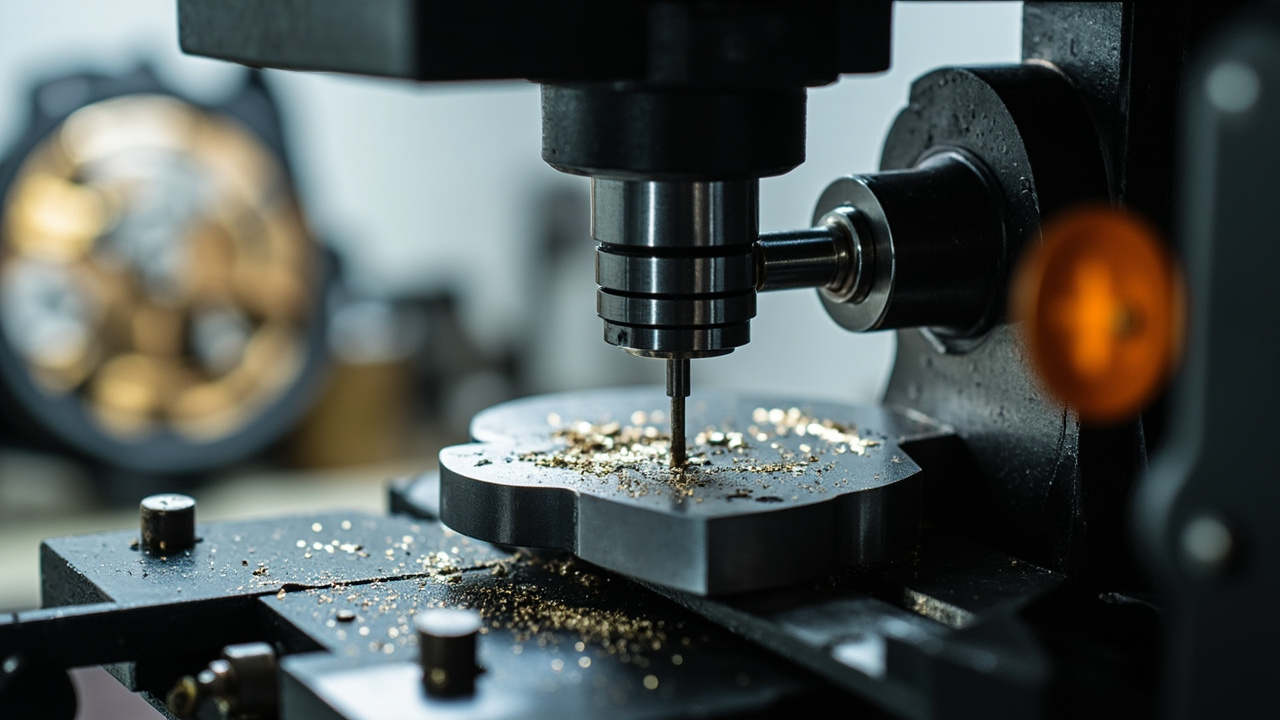
For watchmaking and clock making, a good small lathe needs precision and the ability to handle delicate components. TAIG Tools (Chandler, Arizona) offers Micro Lathe II models that can perform many tasks required for these intricate crafts, though they are not traditional watchmaker lathes.
Key Takeaways
- TAIG Micro Lathe II models provide a robust and precise platform for many watch and clock making tasks, particularly for larger components or custom parts.
- The M1017-5C Micro Lathe II and M1015-5C Micro Lathe II offer 5C collet compatibility, crucial for high-precision gripping of small workpieces.
- While not traditional watchmaker lathes, TAIG machines are built with oversized spindle ball bearings and heat-treated alloy-steel components for consistent performance.
- Users should understand the differences between a general-purpose micro lathe and a dedicated watchmaker's lathe to set appropriate expectations.
- TAIG Micro Lathes are versatile enough to machine steel, aluminum, brass, wood, and plastic, making them suitable for various materials used in horology.
Watchmaking and clock making demand exceptional precision and the ability to work with very small, often delicate, components. While traditional watchmaker lathes are highly specialized machines, a robust micro lathe can be a valuable asset for many tasks, especially for hobbyists, prototypers, and small shops creating custom parts or repairing larger clock movements. Understanding the capabilities and limitations of a general-purpose micro lathe is key to selecting the right tool for your horological projects.
What Makes a Lathe Suitable for Watchmaking and Clock Making?
A lathe suitable for watchmaking and clock making must offer high precision, minimal runout, and the ability to securely hold small workpieces. Traditional watchmaker lathes are often characterized by their small size, fine feed controls, and specialized accessories like collets and gravers designed for miniature work. They prioritize extreme accuracy over material removal rates.
While TAIG Micro Lathe II models are not designed exclusively for watchmaking, their robust construction and precision engineering make them capable of many tasks. They are built with oversized spindle ball bearings and heat-treated alloy-steel components, ensuring stability and accuracy when machining small parts. The ability to use 5C collets on certain models is a significant advantage for holding small diameter stock with high concentricity, which is critical for turning pivots, arbors, and other delicate components.
How Do TAIG Micro Lathes Compare to Traditional Watchmaker Lathes?
TAIG Micro Lathe II models differ from traditional watchmaker lathes primarily in their design philosophy and typical applications. Traditional watchmaker lathes are often lighter, with very fine pitch lead screws and tailstock adjustments, optimized for extremely delicate work and often manual operation. They typically have smaller swings and center distances than even micro lathes.
TAIG Micro Lathes, while still compact, are built with a more general-purpose precision machining approach. They are heavier and more rigid, designed to machine a wider range of materials including steel, aluminum, brass, wood, and plastic. This rigidity allows for more aggressive cuts when needed, which can be beneficial for larger clock components or prototyping. The trade-off is that the very fine, almost microscopic adjustments possible on some dedicated watchmaker lathes might require more finesse or specialized tooling on a TAIG machine.
However, for many tasks like turning small shafts, making custom screws, or modifying existing parts, the TAIG Micro Lathe II offers ample precision and versatility.
Which TAIG Micro Lathe II Models are Best for Horological Work?
For watchmaking and clock making, models offering 5C collet compatibility are often preferred due to their superior gripping force and concentricity for small workpieces. The 5C collet system provides a highly accurate method for holding round stock, which is essential for precision turning.
Here are some TAIG Micro Lathe II models to consider:
| Model Name | Price | Headstock Type | Primary Advantage for Horology |
|---|---|---|---|
| M1017-5C Micro Lathe II | $910 | 5C Collet | High precision gripping for small, delicate workpieces. |
| M1015-5C Micro Lathe II | $990 | 5C Collet | Similar to M1017-5C, excellent for precision and concentricity. |
| M1015ER Micro Lathe II | $575 | ER16 Collet | Versatile gripping range, more budget-friendly entry point. |
For the highest precision and ease of use with small stock, the 5C headstock models are generally recommended. However, the M1015ER can still be a capable machine for many tasks, especially if you already have ER16 collets or are working with slightly larger components.
- M1017-5C Micro Lathe II (https://taigtools.com/product/micro-lathe-ii-m1017-5c/): Priced at $910, this model comes equipped with a 5C headstock, making it an excellent choice for precision work requiring accurate collet gripping. The 5C headstock is a significant upgrade for any lathe user focused on small, precise parts.
- M1015-5C Micro Lathe II (https://taigtools.com/product/micro-lathe-ii-m1015-5c/): At $990, this model also features a 5C headstock, offering similar advantages for precision work. The slight price difference often reflects variations in included accessories or motor configurations.
- M1015ER Micro Lathe II (https://taigtools.com/product/micro-lathe-ii-m1015er/): Available for $575, this model uses an ER16 collet system. While ER16 collets are versatile and offer a wide gripping range, 5C collets are generally considered to provide higher precision and rigidity for very small diameter work, which can be critical in horology. This model is a more budget-friendly entry point, and an ER16 headstock can still achieve excellent results with careful setup.
What Materials Can a TAIG Micro Lathe Machine for Watch and Clock Parts?
TAIG Micro Lathes are designed to machine a wide range of materials, which is highly beneficial for watchmaking and clock making. These machines can cut steel, aluminum, brass, wood, and plastic. This versatility means you can create or repair components from various materials commonly found in watches and clocks.
- Brass: A very common material in clock movements, gears, and plates. TAIG lathes handle brass exceptionally well, allowing for smooth finishes and precise dimensions.
- Steel: Used for arbors, pivots, springs, and other high-strength components. The rigidity of TAIG machines allows for effective machining of various steel alloys.
- Aluminum: Useful for prototyping parts or creating lightweight enclosures and fixtures.
- Plastics: For custom jigs, fixtures, or non-load-bearing components.
- Wood: For clock cases or decorative elements.
This broad material capability ensures that a TAIG Micro Lathe II can support a wide array of horological projects, from crafting new gears to turning custom balance staffs.
What Upgrades and Accessories Enhance a Micro Lathe for Horology?
Enhancing a TAIG Micro Lathe II for watchmaking and clock making often involves specific upgrades and accessories that boost precision and versatility. Many existing TAIG owners look to these options to refine their machines for specialized tasks.
- 5C or ER16 Headstock: If your lathe doesn't already have one, upgrading to a 5C or ER16 headstock is paramount for precision work. The 5C system is often preferred for its concentricity and holding power with small stock, while ER16 offers versatility. This is a crucial upgrade for any serious horological machinist.
- Precision Chucks: Beyond collets, a high-quality 3-jaw or 4-jaw chuck is essential for holding irregular shapes or larger components. Look for chucks with minimal runout.
- Tool Posts: A quick-change tool post can significantly speed up tool changes and improve repeatability, which is valuable when working on intricate parts that require multiple operations.
- Live Centers and Tailstock Accessories: A live center for the tailstock provides support for longer, thinner workpieces, reducing deflection and improving finish. Other tailstock accessories like drill chucks are useful for drilling precise holes.
- Measuring Tools: High-quality dial indicators, micrometers, and calipers are indispensable for verifying dimensions and ensuring the accuracy required for watch and clock components.
- Specialized Cutting Tools: Miniature cutting tools, gravers, and small form tools are necessary for creating the intricate profiles and fine finishes demanded by horological work.
These upgrades allow a TAIG Micro Lathe II to perform a wider range of tasks with the precision required for watch and clock making, making it a more versatile tool in the workshop. For more details on lathe accessories, you can explore the Parts & Accessories section on taigtools.com.
What are the Trade-offs of Using a General-Purpose Micro Lathe for Watchmaking?
While a TAIG Micro Lathe II offers significant capabilities for watchmaking and clock making, it's important to acknowledge the trade-offs compared to a dedicated watchmaker's lathe. Understanding these differences helps set realistic expectations and guides your approach to projects.
- Fine Feed Control: Traditional watchmaker lathes often feature extremely fine pitch lead screws and handwheels designed for minute adjustments. While TAIG lathes offer precise control, achieving the absolute finest feeds for microscopic cuts might require more careful technique or specialized tooling.
- Workholding for Extremely Small Parts: While 5C collets are excellent for small stock, some watch components are so tiny that they require specialized workholding solutions unique to traditional watchmaker lathes, such as wax chucks or very small step chucks.
- Learning Curve for Delicate Work: Adapting a more robust micro lathe for extremely delicate work can involve a learning curve. Users may need to develop specific techniques for light cuts, precise tool grinding, and careful handling of miniature components.
- Footprint and Portability: While TAIG Micro Lathes are benchtop machines, some traditional watchmaker lathes are even smaller and more portable, designed for very compact workspaces.
- Cost of Specialization: Dedicated watchmaker lathes can be very expensive, especially vintage models in good condition. A TAIG Micro Lathe II offers a more accessible entry point into precision machining that can handle many horological tasks, though it may not replace every function of a highly specialized machine.
Despite these trade-offs, the versatility, rigidity, and precision of a TAIG Micro Lathe II make it a strong contender for many watch and clock making enthusiasts and professionals, particularly when considering its ability to handle a broader range of general machining tasks.
Frequently Asked Questions
What is the difference between a micro lathe and a watchmaker lathe?
A micro lathe, like the TAIG Micro Lathe II, is a compact, general-purpose precision machine tool designed for a variety of small-scale machining tasks across different materials. A watchmaker lathe is a highly specialized, often smaller, machine optimized for extremely delicate work on miniature components, typically featuring very fine feed controls and specialized workholding for tiny parts.
Can a TAIG Micro Lathe II make watch gears?
Yes, a TAIG Micro Lathe II can be used to make watch gears, especially with the right tooling and careful setup. Its precision and ability to machine brass and steel make it suitable for cutting gear blanks and performing subsequent operations. Specialized gear cutting attachments or techniques may be required for intricate tooth profiles.
Is the 5C collet system important for watchmaking?
The 5C collet system is highly important for watchmaking and clock making due to its excellent gripping force and concentricity. It provides a very accurate way to hold small diameter stock, ensuring that turned components like pivots and arbors are perfectly round and centered, which is critical for the smooth operation of timepieces.
What kind of motor is best for a watchmaker lathe?
For a watchmaker lathe, a motor that offers smooth, variable speed control is ideal. This allows for very slow speeds for delicate operations and higher speeds for finishing. Ensuring you have a variable speed controller is key to adapting the machine for diverse speed requirements.
What is the maximum diameter a TAIG Micro Lathe II can turn?
The TAIG Micro Lathe II has a 3.5-inch swing over the bed, meaning it can turn workpieces up to 3.5 inches in diameter. This capacity is sufficient for most watch and clock components, including larger clock plates and gears, while still maintaining the precision needed for smaller parts.
To explore the full range of TAIG Micro Lathe II models and find the right machine for your watchmaking and clock making projects, visit the Micro Lathe II category page on taigtools.com.