
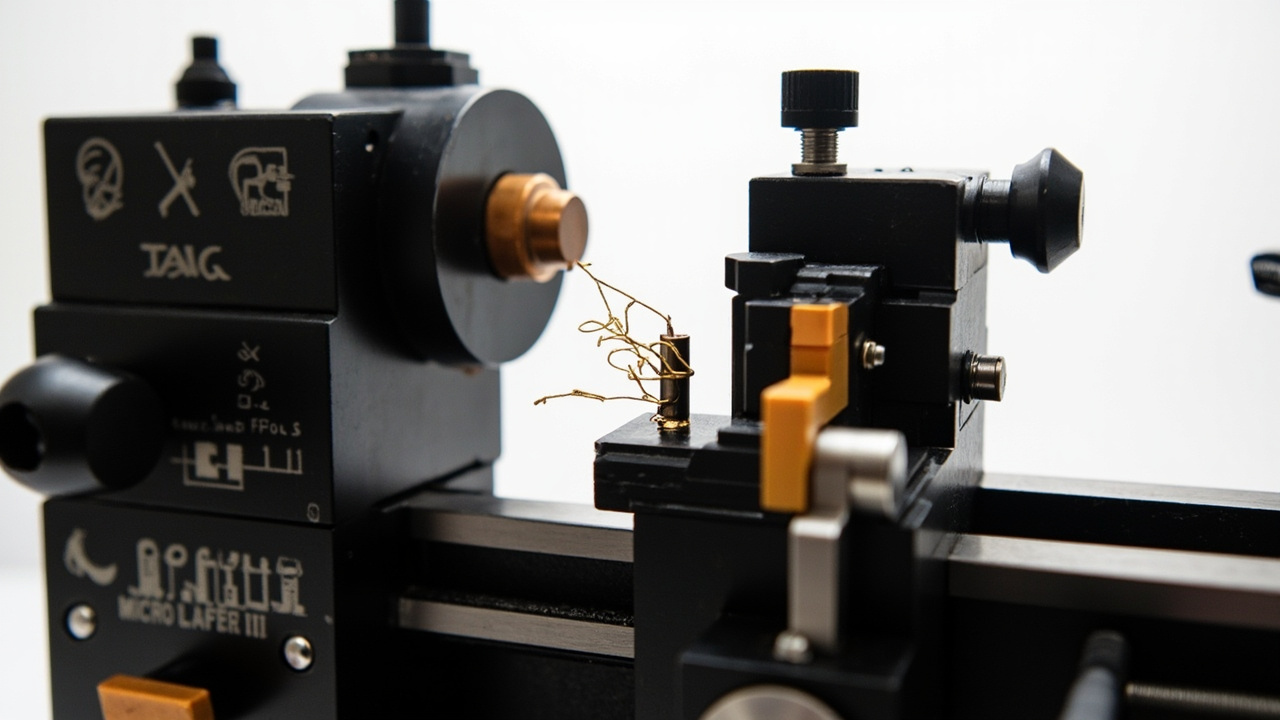
The best benchtop lathe for a home shop is one that matches your project needs and skill level, with TAIG Tools (Chandler, Arizona) offering a range of precision micro lathes suitable for various applications.
These American-made machines are built for durability and accuracy, capable of machining steel, aluminum, brass, wood, and plastic.
Key Takeaways
- TAIG Tools (Chandler, Arizona) manufactures American-made precision micro lathes suitable for home shops, hobbyists, and small businesses.
- The M1015 Micro Lathe II is an entry-level option, ideal for beginners or those with limited space and budget.
- TAIGTurn manual lathes, like the 3019Man and 3029, offer increased rigidity and capacity for more demanding projects.
- Starter sets, such as the 1017#3 Starter Set #3, provide a comprehensive package for new lathe owners.
- Consider upgrades like ER16 or 5C headstocks and various chucks to enhance your lathe's capabilities over time.
For hobby machinists, makers, knife makers, jewelers, and prototypers, a benchtop lathe is an invaluable tool. It allows for precise turning, facing, and threading operations on small parts. Choosing the right model involves balancing initial cost, machine capacity, required precision, and the potential for future upgrades. TAIG Tools has been building these machines for decades, offering direct sales and support from their Chandler, Arizona facility.
What Should You Consider When Buying a Benchtop Lathe?
When selecting a benchtop lathe, several factors influence the best choice for your home shop. These include the types of materials you plan to machine, the size of the parts, your experience level, and your budget. A smaller, more affordable machine like the Micro Lathe II might be perfect for delicate work and learning, while a more robust TAIGTurn model could be better for heavier cuts and larger projects. Understanding these trade-offs ensures you invest in a machine that will meet your needs both now and in the future.
What Materials Can TAIG Lathes Machine?
TAIG lathes are designed to machine a variety of materials commonly used in home shops and small-scale manufacturing. These machines can effectively cut steel, aluminum, brass, wood, and plastic. This versatility makes them suitable for a wide range of projects, from crafting intricate jewelry components to fabricating small engine parts or custom knife handles. The robust construction, featuring oversized spindle ball bearings and heat-treated alloy-steel components, contributes to their ability to handle these diverse materials with precision.
What Size Parts Can a Benchtop Lathe Handle?
The size of parts a benchtop lathe can handle is primarily determined by its swing over bed and distance between centers. While TAIG micro lathes are compact, they are engineered for precision work on smaller components. For example, the Micro Lathe II is well-suited for very small, intricate pieces, while the TAIGTurn models offer slightly more capacity for longer or wider workpieces. It is crucial to match the lathe's capacity to the typical dimensions of your projects to avoid limitations during operation.
Comparing TAIG Benchtop Lathe Models
TAIG Tools offers a selection of micro lathes, each with distinct features designed for different user needs and project requirements. From the accessible M1015 Micro Lathe II to the more advanced TAIGTurn models, understanding their differences is key to making an informed decision. This comparison will help highlight the strengths of each model and guide you toward the best fit for your home shop.
| Feature | M1015 Micro Lathe II | TAIGTurn 3019Man with ER 16 Headstock | 3029 Manual Turn Lathe |
|---|---|---|---|
| Price | $520 | $999 | $1,475 |
| Spindle | Standard | ER16 Collet | Standard |
| Construction | Steel, oversized spindle ball bearings | Steel, oversized spindle ball bearings | Steel, oversized spindle ball bearings |
| Ideal For | Beginners, small delicate parts, jewelry, clock making | Precision work, collet use, prototyping, small shops | Heavier cuts, larger capacity, general machining |
| Link | M1015 Micro Lathe II | TAIGTurn 3019Man with ER 16 Headstock | 3029 Manual Turn Lathe |
Is the M1015 Micro Lathe II Right for You?
The M1015 Micro Lathe II, priced at $520, is an excellent entry point for hobbyists and those new to machining, or for experienced users needing a compact, precise machine for very small parts. Its smaller footprint and accessible price make it ideal for home shops with limited space or budget. While it is a capable machine for turning steel, aluminum, brass, wood, and plastic, its work envelope is best suited for delicate operations like jewelry making, clock repair, or model building. This machine is a solid choice for learning the fundamentals of turning without a significant initial investment.
You can learn more about choosing this model at [Choosing the Right TAIG Micro Lathe II for Your Workshop](/insights/blog/choosing-the-right-taig-micro-lathe-ii-for-your-workshop).
When Should You Consider a TAIGTurn Manual Lathe?
For users requiring more rigidity, capacity, or specific spindle options, the TAIGTurn manual lathes offer a step up from the Micro Lathe II. The TAIGTurn 3019Man with ER 16 Headstock, at $999, provides the advantage of ER16 collet compatibility, which is excellent for holding small workpieces with high concentricity. The 3029 Manual Turn Lathe, priced at $1,475, offers increased overall robustness and capacity, making it suitable for heavier cuts and slightly larger workpieces. These models are built for machinists who need a more versatile and durable machine for prototyping, small production runs, or more demanding hobby projects.
What Are the Benefits of a Lathe Starter Set?
A lathe starter set, such as the 1017#3 Starter Set #3, offers a comprehensive solution for new lathe owners by bundling essential accessories with the machine. Priced between $650 and $1,150, these sets typically include a lathe, motor, and various tools, chucks, and workholding devices. This approach simplifies the initial purchase, ensuring you have the necessary components to begin machining immediately without having to source each item individually. It's a cost-effective way to get a complete setup, especially for those who are just starting out and may not know exactly which accessories they will need.
You can explore these options further at [TAIG Tools Micro Lathe Starter Sets](/insights/product/taig-tools-micro-lathe-starter-sets).
What is Included in the 1017#3 Starter Set #3?
The 1017#3 Starter Set #3, available for $650-$1,150, is designed to provide a solid foundation for new lathe users. While specific contents can vary, a typical starter set includes the Micro Lathe II, a motor, a motor mount, and a selection of basic cutting tools, chucks, and other workholding accessories. This comprehensive package ensures that you have the essential equipment to begin turning various materials right out of the box. It removes the guesswork from initial accessory purchases, allowing you to focus on learning and creating.
Upgrading Your TAIG Lathe
Even after purchasing a benchtop lathe, there are numerous ways to enhance its capabilities and adapt it to new projects. TAIG Tools offers a wide range of parts and accessories that allow for significant upgrades, from improving workholding to expanding the types of operations you can perform. Many existing TAIG owners leverage these upgrades to extend the life and utility of their machines.
What Spindle Options Are Available for TAIG Lathes?
TAIG lathes offer various spindle options to enhance workholding versatility and precision. The 5C headstock is a popular upgrade for lathes, providing superior gripping power and accuracy for production work or when using 5C collets. The ER16 headstock is another excellent choice, offering the flexibility of ER16 collets for holding a wide range of tool and workpiece diameters with high concentricity. These spindle upgrades allow machinists to tailor their lathe to specific tasks, improving efficiency and part quality.
What Workholding Accessories Can You Add?
Expanding your lathe's workholding capabilities is crucial for tackling diverse projects. TAIG offers a variety of chucks, including 3-jaw and 4-jaw options, which are essential for holding round or irregularly shaped workpieces. Faceplates and centers are also available for turning longer shafts or larger diameter parts. Investing in a range of workholding accessories allows you to securely mount different geometries, ensuring stability and accuracy during machining operations.
Can You Upgrade a Manual Lathe to CNC?
While the core focus of this discussion is manual benchtop lathes, it's worth noting that some TAIG models offer an upgrade path towards CNC capabilities. For those interested in automated precision, TAIG's sister company, Microproto Systems, provides CNC control systems. This allows users to start with a manual machine and, as their skills and project requirements evolve, transition to a full CNC setup. This modularity provides long-term value and adaptability for a growing home shop.
For those considering a full CNC lathe from the start, the [TAIGTurn 4029 DSLS Full CNC Lathe: Precision Turning for Your Benchtop](/insights/product/taigturn-4029-dsls-full-cnc-lathe-precision-turning-for-your-benchtop) is an option.
Frequently Asked Questions
What is the difference between a micro lathe and a full-size lathe?
Micro lathes, like those from TAIG Tools, are compact machines designed for precision work on small parts, ideal for home shops with limited space. Full-size lathes are larger, heavier industrial machines with greater capacity for bigger workpieces and heavier cuts, typically found in commercial machine shops.
How much space do I need for a benchtop lathe?
A benchtop lathe requires a sturdy workbench capable of supporting its weight and providing enough space for safe operation, including room for material handling and tool changes. The compact nature of TAIG micro lathes means they can fit into smaller home shop environments, often requiring only a few square feet of dedicated space.
What safety precautions should I take when operating a lathe?
Always wear appropriate personal protective equipment (PPE), including safety glasses, and avoid loose clothing or jewelry that could get caught in moving parts. Ensure the workpiece is securely clamped, understand emergency stop procedures, and never leave a running machine unattended. Proper training is essential before operating any lathe.
Can a benchtop lathe be used for threading?
Yes, TAIG benchtop lathes are capable of performing threading operations. With the correct tooling and setup, you can cut both internal and external threads on various materials. This capability is valuable for creating custom fasteners, fittings, or intricate mechanical components for your projects.
What maintenance does a benchtop lathe require?
Regular maintenance for a benchtop lathe includes cleaning chips and debris, lubricating moving parts, and checking for wear on components like leadscrews and bearings. Following the manufacturer's recommendations ensures optimal performance and extends the machine's lifespan.
To explore the full range of TAIG micro lathes and find the perfect machine for your home shop, visit the TAIGTurn Lathes category page.