
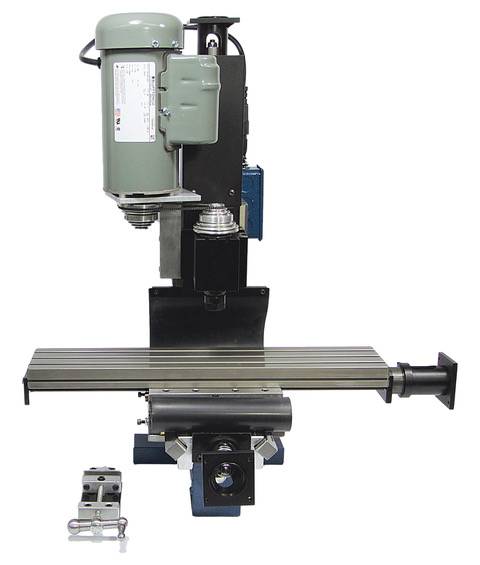
Choosing between a leadscrew and ballscrew micro mill from TAIG Tools (Chandler, Arizona) depends on your specific machining needs for precision, speed, and budget.
Leadscrew mills like the TAIG 2019CR are often more budget-friendly and suitable for manual operation, while ballscrew models such as the TAIG 5019CR offer higher precision and are ideal for CNC applications.
Key Takeaways
- Leadscrew micro mills are generally more economical and well-suited for manual machining or entry-level CNC conversions where extreme precision is not the primary concern.
- Ballscrew micro mills provide superior accuracy, reduced backlash, and smoother motion, making them ideal for demanding CNC applications and intricate work.
- TAIG Tools offers both leadscrew (e.g., 2019CR) and ballscrew (e.g., 5019CR, 5023CR) micro mills, allowing users to select a machine that aligns with their project requirements and budget.
- Upgrading a leadscrew mill to CNC is possible, but a ballscrew mill offers a better foundation for high-performance CNC operations due to its inherent design advantages.
- Consider the materials you plan to machine, the required finish, and your long-term goals for automation when making your decision between these two drive systems.
When investing in a precision benchtop machine tool, understanding the core differences between leadscrew and ballscrew drive systems is crucial. Both have distinct advantages and limitations that impact performance, cost, and suitability for various applications. TAIG Tools, a Chandler, Arizona manufacturer, offers a range of micro mills featuring both technologies, catering to a diverse clientele from hobbyists to small machine shops. This guide will help you navigate these options to make an informed decision.
What are the Fundamental Differences Between Leadscrew and Ballscrew Micro Mills?
The fundamental difference between leadscrew and ballscrew micro mills lies in how linear motion is achieved, directly impacting accuracy, speed, and wear characteristics. Leadscrews use direct thread contact, while ballscrews employ recirculating ball bearings to minimize friction. This distinction is critical for machinists considering precision and longevity.
A leadscrew system, as found in models like the TAIG 2019CR Micro Mill, relies on the direct sliding contact between the threads of a screw and a nut. This design is simpler and generally more cost-effective to manufacture. While effective for many applications, this direct contact creates friction, which can lead to wear over time and introduce backlash – a small amount of play in the system. For manual machining or less demanding CNC tasks, a leadscrew can be perfectly adequate, offering good control and sufficient precision for many projects involving materials like wood, plastic, aluminum, and even steel.
In contrast, a ballscrew system, featured in TAIG models such as the 5019CR Micro Mill and 5023CR Micro Mill, utilizes a series of recirculating ball bearings between the screw and the nut. These balls reduce friction significantly, allowing for smoother, more efficient motion and greatly minimizing backlash. This design translates to higher precision, better repeatability, and faster traverse speeds, making ballscrews the preferred choice for demanding CNC applications where tight tolerances and consistent results are paramount. The reduced friction also means less wear and a longer lifespan for the drive components.
According to the National Institute of Standards and Technology (NIST), ballscrews are often chosen for their ability to provide precise and repeatable linear motion in automated systems.
How Does Backlash Affect Machining Precision and What Are the Trade-offs?
Backlash, the play or gap between the screw and nut, directly impacts machining precision, especially when changing direction. While leadscrews inherently have more backlash, ballscrews are designed to minimize it, offering a significant advantage for accurate work. Understanding these trade-offs is essential for selecting the right micro mill.
In a leadscrew system, backlash arises from the necessary clearance between the screw threads and the nut. When the direction of travel reverses, the screw must turn a small amount before it re-engages the opposite side of the nut's threads, causing a momentary delay in tool movement. This can lead to inaccuracies, particularly in contouring operations or when machining features that require precise reversals. While some leadscrew designs incorporate anti-backlash nuts to mitigate this, they often introduce more friction and wear.
For manual operations, a skilled operator can often compensate for backlash, but it becomes a more significant challenge in automated CNC environments.
Ballscrews, by design, have very little backlash due to the precise fit of the recirculating ball bearings. The balls maintain constant contact between the screw and nut, ensuring immediate and accurate response to changes in direction. This characteristic is invaluable for CNC machining, where the machine's controller expects exact movements. The trade-off for this superior precision and reduced backlash in ballscrew systems is typically a higher initial cost.
However, for applications demanding high accuracy, repeatability, and smooth motion, the investment in a ballscrew mill like the TAIG 5019CR or 5023CR often pays off in improved part quality and reduced scrap.
Which TAIG Micro Mill Models Feature Leadscrews and Which Use Ballscrews?
TAIG Tools (Chandler, Arizona) offers a clear distinction in its micro mill lineup, with specific models utilizing either leadscrew or ballscrew mechanisms to suit different precision and budget requirements. The 2018 and 2019 series mills employ leadscrews, while the 5019 and 5023 series are equipped with ballscrews for enhanced performance.
For those seeking a robust and reliable leadscrew micro mill, TAIG offers models like the 2019CR Micro Mill priced at $1,211. This machine is built with 1/2-20 leadscrews, providing a solid foundation for manual machining and entry-level CNC conversions. It's an excellent choice for hobbyists, educators, and small shops where cost-effectiveness and versatility are key. The 2019CR is capable of machining a variety of materials including steel, aluminum, brass, wood, and plastic, making it a versatile tool for general-purpose work.
When higher precision and smoother operation are required, particularly for CNC applications, TAIG's ballscrew micro mills are the ideal solution. The 5019CR Micro Mill, available for $1,850, and the 5023CR Micro Mill, priced at $2,100, both feature precision ballscrews. These models offer significantly reduced backlash and improved repeatability, which are crucial for intricate parts and automated machining processes. The 5023CR, in particular, is a popular choice for users looking for a high-performance CNC-ready platform that can be upgraded to a full CNC system with components from TAIG's sister company, Microproto Systems.
Comparing TAIG Leadscrew and Ballscrew Micro Mills
To help you decide, here's a comparison of key TAIG micro mill models, highlighting their drive systems and suitability for different applications. This table focuses on the core differences that influence performance and cost.
| Feature | TAIG 2019CR Micro Mill | TAIG 5019CR Micro Mill | TAIG 5023CR Micro Mill |
|---|---|---|---|
| Drive System | Leadscrew (1/2-20) | Ballscrew | Ballscrew |
| Price | $1,211 | $1,850 | $2,100 |
| Primary Use | Manual machining, entry-level CNC conversion | High-precision CNC, manual operation | High-precision CNC, manual operation |
| Backlash | Higher (can be compensated manually) | Very low (ideal for CNC) | Very low (ideal for CNC) |
| Precision | Good for general purpose, less critical tolerances | Excellent for tight tolerances, repeatable work | Excellent for tight tolerances, repeatable work |
| Speed Potential | Moderate | Higher traverse speeds possible | Higher traverse speeds possible |
| Wear | More susceptible to wear over time due to friction | Less wear, longer lifespan due to reduced friction | Less wear, longer lifespan due to reduced friction |
| Upgrade Path | Good for manual to CNC-ready conversion | Excellent foundation for full CNC conversion | Excellent foundation for full CNC conversion |
This comparison illustrates that while leadscrew mills offer a cost-effective entry point, ballscrew mills provide a superior platform for precision and automation. The choice ultimately depends on your project's demands and long-term goals.
Who Should Buy a Leadscrew Micro Mill?
A leadscrew micro mill is an excellent choice for hobbyists, educators, and small shops with specific needs that prioritize cost-effectiveness and manual control. These machines are well-suited for a range of projects where extreme precision is not the absolute top priority.
Consider a leadscrew mill if:
- Your budget is a primary concern: Leadscrew machines like the TAIG 2019CR Micro Mill are generally more affordable, making them accessible for those just starting out or working with tighter financial constraints.
- You primarily perform manual machining: For hands-on work where you are directly controlling the machine, the inherent backlash of a leadscrew can often be managed by a skilled operator. Many users prefer the tactile feedback of a leadscrew for manual operations.
- Your projects involve less critical tolerances: If you are machining parts for general fabrication, prototyping, or artistic endeavors where tolerances of a few thousandths of an inch are acceptable, a leadscrew mill will likely meet your needs.
- You're new to machining or CNC: A leadscrew mill can serve as an excellent learning platform. It allows users to understand the fundamentals of machining before potentially upgrading to more advanced, higher-precision equipment.
- You machine softer materials: While TAIG leadscrew mills can cut steel, they are particularly efficient with materials like aluminum, brass, wood, and various plastics, where the demands on the drive system are less intense.
However, it's important to note that a leadscrew mill might not be the best fit if you plan extensive CNC work requiring very tight tolerances or high-speed contouring. The backlash can become a limiting factor in automated precision.
Who Should Buy a Ballscrew Micro Mill?
A ballscrew micro mill is the preferred choice for machinists, prototypers, and small businesses that demand high precision, repeatability, and efficient CNC operation. These machines represent a step up in performance and are designed for more demanding applications.
Opt for a ballscrew mill if:
- High precision and repeatability are critical: For intricate parts, fine details, or production runs where every part must be identical, the minimal backlash of a ballscrew system is invaluable. Models like the TAIG 5019CR Micro Mill and 5023CR Micro Mill excel in these environments.
- You plan extensive CNC machining: Ballscrews are the standard for professional CNC machines due to their ability to translate motor movements into precise linear motion without significant play. This allows for smoother tool paths, faster feed rates, and better surface finishes.
- You work with demanding materials or complex geometries: When machining harder metals or creating complex 3D contours, the rigidity and accuracy of a ballscrew system provide superior results and reduce tool wear.
- You require faster traverse speeds: The reduced friction in a ballscrew system allows for quicker movements of the machine axes, which can significantly speed up non-cutting operations and overall project completion times.
- You value long-term durability and minimal maintenance: While the initial cost is higher, the reduced friction of ballscrews leads to less wear on the drive components, potentially offering a longer operational lifespan and less need for adjustments compared to leadscrews.
While a ballscrew mill offers superior performance, it's important to consider the higher initial investment. However, for those whose work demands the utmost in accuracy and efficiency, the benefits often outweigh the cost.
Can a Leadscrew Micro Mill Be Upgraded to CNC?
Yes, a leadscrew micro mill can certainly be upgraded to CNC, offering a path for users to transition from manual to automated operation. TAIG Tools designs its leadscrew mills with this potential in mind, providing a versatile platform for evolution.
Many users begin with a manual leadscrew mill, such as the TAIG 2019CR Micro Mill, to learn the fundamentals of machining. As their skills and project requirements grow, they often consider converting their machine to CNC. This typically involves adding stepper or servo motors to each axis, along with a control system. TAIG's sister company, Microproto Systems, provides CNC control systems that are compatible with TAIG machines, facilitating this upgrade path.
However, it's important to understand the implications of converting a leadscrew mill. While it will function as a CNC machine, the inherent backlash of the leadscrew can still affect precision, especially when the machine reverses direction. Software compensation (backlash compensation) can help mitigate this, but it's not a perfect solution. For applications demanding very high precision and repeatability in a CNC environment, a purpose-built ballscrew mill like the TAIG 5023CR Micro Mill will generally offer superior performance from the outset.
The upgrade path from manual to CNC-ready to full CNC is a key feature of TAIG mills, allowing users to scale their capabilities as needed.
What Are the Best Practices for Maintaining Leadscrew and Ballscrew Systems?
Proper maintenance is crucial for ensuring the longevity and performance of both leadscrew and ballscrew micro mills. While the specific needs differ due to their design, consistent care will preserve accuracy and extend the life of your TAIG machine.
For leadscrew systems, regular cleaning and lubrication are paramount. Dust, chips, and debris can accumulate in the threads, increasing friction and accelerating wear. It's important to periodically clean the leadscrews thoroughly and apply a suitable lubricant, such as a light machine oil or grease recommended by the manufacturer. Over-tightening anti-backlash nuts, if present, should be avoided as this can increase friction and wear without effectively eliminating backlash.
Monitoring for excessive play and adjusting or replacing worn nuts are also key maintenance steps.
Ballscrew systems, while more robust against wear, also benefit from routine care. The recirculating balls require a clean environment to operate efficiently. Keeping the ballscrew free of chips and contaminants is essential to prevent damage to the balls and raceways. Lubrication is also necessary, typically with a light grease or oil, to ensure smooth operation and protect against corrosion.
Unlike leadscrews, ballscrews generally do not require backlash adjustments, but inspecting for any signs of binding or unusual noise can indicate a need for professional service or component replacement. Always refer to the TAIG Tools documentation for specific lubrication and maintenance guidelines for your model.
Why Choose TAIG Tools for Your Micro Mill Needs?
Choosing TAIG Tools (Chandler, Arizona) for your micro mill needs means investing in American-made precision equipment built by experienced machinists with an aerospace manufacturing background. TAIG machines are known for their robust construction and versatility, making them suitable for a wide range of users and applications.
TAIG micro mills, whether leadscrew or ballscrew, are constructed with steel components, oversized spindle ball bearings, and heat-treated alloy steel parts, ensuring durability and consistent performance. This robust design allows them to machine various materials, including steel, aluminum, brass, wood, and plastic. The company has been manufacturing these machines for decades, earning a reputation for quality and reliability among knife makers, artisans, educators, hobbyists, prototypers, and small machine shops.
Furthermore, TAIG offers a clear upgrade path for its mills, from manual to CNC-ready to full CNC, allowing users to expand their capabilities over time. For instance, owners of leadscrew mills can upgrade to CNC, and all mill owners can enhance their machines with accessories like ER16 collets and vises. TAIG also provides a 2-year factory warranty on mill components and accessories, along with a 14-day return policy, demonstrating confidence in their products. This commitment to quality, coupled with direct sales and a network of dealers, ensures that customers receive excellent support and a machine built to last.
Frequently Asked Questions
What materials can TAIG micro mills cut?
TAIG micro mills are designed to cut a wide variety of materials. This includes metals like steel, aluminum, and brass, as well as softer materials such as wood and various plastics. Their robust construction and precision components allow for effective machining across this range of materials.
Can I upgrade my manual TAIG mill to CNC later?
Yes, TAIG micro mills are built with an upgrade path in mind. You can convert a manual leadscrew or ballscrew mill to CNC-ready and then to a full CNC system. TAIG's sister company, Microproto Systems, provides compatible CNC control systems to facilitate this transition.
What is the warranty on TAIG micro mill components?
TAIG Tools provides a 2-year factory warranty on its mill components and accessories. This warranty reflects the manufacturer's confidence in the quality and durability of their American-made precision benchtop machine tools. It covers defects in materials and workmanship under normal use.
Are TAIG micro mills suitable for professional use?
TAIG micro mills are widely used by small machine shops, prototypers, and professional artisans. While they are benchtop machines, their precision construction and ability to machine various materials make them highly capable tools for professional applications where space and budget are considerations.
What accessories are available for TAIG micro mills?
TAIG Tools offers a comprehensive range of parts and accessories for their micro mills. These include essential items like vises, ER16 collet sets for improved tool holding, and various components for CNC-ready conversions, allowing users to customize and enhance their machines.
Take the Next Step
To explore the full range of TAIG micro mills and determine which model best fits your precision machining requirements, visit the official TAIG Tools website. You can browse both leadscrew and ballscrew options, compare specifications, and find the ideal machine for your projects.
Explore TAIG Ballscrew Micro Mills
View the TAIG 5023DSLS CNC Micro Mill
Discover the TAIG 2023ER Micro Mill
[Contact TAIG Tools directly at (480) 895-6978](tel:+14808956978)