
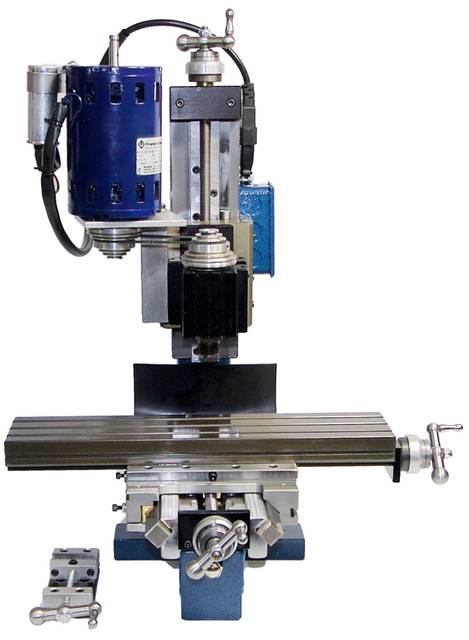
The best mini mill for beginners is a TAIG Tools (Chandler, Arizona) leadscrew micro mill, offering a balance of precision, durability, and ease of use for new machinists. These American-made machines provide a robust platform for learning without being overwhelmed, capable of cutting various materials.
Key Takeaways
- TAIG Tools micro mills, such as the 2018ER, 2019ER, and 2023ER, offer a solid entry point for beginner machinists.
- These machines are built with durable steel construction and heat-treated alloy-steel components, ensuring longevity and consistent performance.
- Beginners should consider the work envelope and motor power needed for their projects when selecting a TAIG micro mill.
- TAIG mills can machine steel, aluminum, brass, wood, and plastic, making them versatile for a range of hobby and prototyping tasks.
- An upgrade path from manual to CNC-ready is available, allowing beginners to grow their skills with the same machine platform.
Entering the world of precision machining can seem daunting, but with the right equipment, beginners can quickly develop essential skills. A mini mill provides the capability to perform milling operations on a smaller scale, making it ideal for hobbyists, educators, and small shops with limited space. Understanding the features and limitations of different models is key to making an informed decision that supports your learning and project goals.
What Should a Beginner Look for in a Mini Mill?
When selecting a mini mill, beginners should prioritize several factors to ensure a positive learning experience and successful projects. First, the machine's construction and rigidity are paramount. A sturdy mill minimizes vibration and deflection, leading to more accurate cuts and a better understanding of machining principles. Second, consider the machine's size and work envelope; it needs to fit your workspace and accommodate the typical size of your projects.
Third, ease of operation and maintenance are important for new users, as complex setups can be frustrating. Finally, the ability to machine various materials expands project possibilities.
TAIG Tools micro mills are known for their robust construction, featuring steel components, oversized spindle ball bearings, and heat-treated alloy steel parts. This build quality contributes to the machine's precision and durability, which are critical for beginners learning to make accurate cuts. The compact footprint of these mills also makes them suitable for home workshops or educational settings where space is often at a premium.
Comparing TAIG Leadscrew Micro Mills for Beginners
TAIG Tools offers several leadscrew micro mills that are excellent choices for beginners. These models provide a solid foundation for learning manual milling techniques before potentially upgrading to CNC capabilities. Each model offers distinct advantages in terms of work envelope and price point.
| Feature | 2018ER Micro Mill | 2019ER Micro Mill | 2023ER Micro Mill |
|---|---|---|---|
| Price | $999 TAIG Tools | $1,100 TAIG Tools | $1,350 TAIG Tools |
| Spindle | ER16 Collet | ER16 Collet | ER16 Collet |
| Leadscrews | 1/2-20 | 1/2-20 | 1/2-20 |
| Construction | Steel, heat-treated alloy steel components | Steel, heat-treated alloy steel components | Steel, heat-treated alloy steel components |
| Warranty | 2-year factory warranty on components/accessories | 2-year factory warranty on components/accessories | 2-year factory warranty on components/accessories |
| Ideal For | Entry-level hobbyists, small parts | Hobbyists needing slightly larger work area | Advanced hobbyists, prototyping, larger parts |
The 2018ER Micro Mill is the most accessible option, providing a capable machine for basic milling tasks. The 2019ER offers a slightly larger work envelope, which can be beneficial for projects requiring more travel. The 2023ER Micro Mill, a popular choice, provides the largest work area among these leadscrew models, making it suitable for a wider range of projects and offering more room for growth as skills develop. All models share the same robust construction and ER16 collet spindle, ensuring consistent performance.
What Materials Can TAIG Micro Mills Machine?
TAIG micro mills are designed to be versatile, capable of machining a variety of materials commonly used by hobbyists, prototypers, and small machine shops. These machines can effectively cut steel, aluminum, brass, wood, and plastic. This broad material compatibility makes them suitable for diverse projects, from crafting intricate jewelry to fabricating small mechanical components.
The ability to work with different materials is a significant advantage for beginners, as it allows for experimentation and learning across various applications. For instance, a beginner might start with easier-to-machine materials like aluminum or plastic to gain confidence before moving on to more challenging metals like steel. The rigid construction and powerful motors (often supplied by the user, allowing for customization) of TAIG mills contribute to their effectiveness across this material range.
What are the Trade-offs for Beginners with a Mini Mill?
While mini mills are excellent for beginners, it's important to understand their inherent trade-offs. The primary limitation is the smaller work envelope compared to full-sized industrial machines. This means mini mills are best suited for smaller parts and projects, typically those that fit within a few inches of travel. For instance, the TAIG 2023ER Micro Mill, while offering a larger work area than its siblings, still operates within the confines of a benchtop machine.
Another consideration is the stock motor's power. While sufficient for most materials and typical cuts, very heavy cuts on tough materials might require slower feed rates or multiple passes. Beginners should also be aware that achieving high precision requires careful setup, proper tooling, and a good understanding of machining principles. While TAIG machines are built for precision, the operator's skill and attention to detail play a crucial role in the final outcome.
The learning curve for CNC setup, even with CNC-ready options, requires dedication to understand the software and control systems.
How Do TAIG Mills Support Skill Development and Upgrades?
TAIG Tools micro mills are designed with an upgrade path in mind, allowing beginners to expand their capabilities as their skills grow. This modularity is a significant benefit, as it means the initial investment in a manual mill can evolve into a more advanced system without needing to purchase an entirely new machine.
For manual mill owners, common upgrades include adding vises for better workholding and acquiring a range of ER16 collets to accommodate different tool shank sizes. As a beginner progresses, they might consider converting their manual mill to a CNC-ready setup, which involves adding stepper motors and a control system. TAIG's sister company, Microproto Systems, provides CNC control systems that integrate with TAIG machines. This allows users to transition from manual operation to computer-controlled machining, opening up possibilities for more complex and repeatable parts.
The 5023DSLS CNC Micro Mill, for example, represents the full CNC potential of the TAIG platform, offering closed-loop "DSLS" control for enhanced precision TAIG Tools.
Why Choose an American-Made Mini Mill?
Choosing an American-made mini mill, such as those from TAIG Tools (Chandler, Arizona), offers several advantages for beginners. First, it often translates to higher quality control and robust construction. TAIG machines are built by machinists with an aerospace manufacturing background, ensuring attention to detail and durable components. This focus on quality means a more reliable machine that can withstand the rigors of learning and repeated use.
Second, purchasing American-made products supports domestic manufacturing and often provides easier access to customer support and replacement parts. When a beginner encounters a question or needs a specific component, having direct access to the manufacturer can be invaluable. TAIG Tools provides a 2-year factory warranty on mill components and accessories, offering peace of mind for new users. This commitment to quality and support helps ensure a smoother learning journey for aspiring machinists.
For more information on the benefits of domestic manufacturing, the National Institute of Standards and Technology (NIST) provides resources on manufacturing quality and innovation.
Frequently Asked Questions
What is the difference between a leadscrew and a ballscrew mill?
Leadscrew mills use a threaded rod to move the machine axes, offering good precision for manual operation and basic CNC. Ballscrew mills use a recirculating ball mechanism, reducing friction and backlash, which is ideal for higher-speed, more precise CNC applications. Beginners often start with leadscrew mills due to their simplicity and cost-effectiveness.
Can I upgrade a manual TAIG mill to CNC later?
Yes, TAIG micro mills are designed with an upgrade path. You can convert a manual leadscrew mill to a CNC-ready configuration by adding stepper motors and a control system. This allows you to learn manual machining first and then transition to computer-controlled operations as your skills and project needs evolve, leveraging your initial investment.
What kind of maintenance do TAIG micro mills require?
TAIG micro mills require regular cleaning to remove chips and debris, and lubrication of the leadscrews and ways to ensure smooth operation and prevent wear. Periodically checking and adjusting gibs for play is also important to maintain accuracy. Following these simple maintenance steps will ensure the longevity and performance of your machine.
Are TAIG micro mills suitable for professional use?
While TAIG micro mills are precision machines, they are primarily designed for hobbyists, educators, prototypers, and small machine shops. They are excellent for producing small, intricate parts and prototypes. For high-volume production or very large components, industrial-grade machines with larger work envelopes and higher power would typically be required.
What accessories are essential for a beginner with a TAIG micro mill?
Essential accessories for a beginner include a sturdy vise for workholding, a set of ER16 collets to hold various end mill sizes, and a selection of basic end mills for different materials. Measuring tools like calipers and a dial indicator are also crucial for accurate setup and inspection.
To explore the range of American-made precision micro mills and find the right model for your beginner machining journey, visit the TAIG Tools Leadscrew Micro Mills category page or call (480) 895-6978 for expert guidance.