
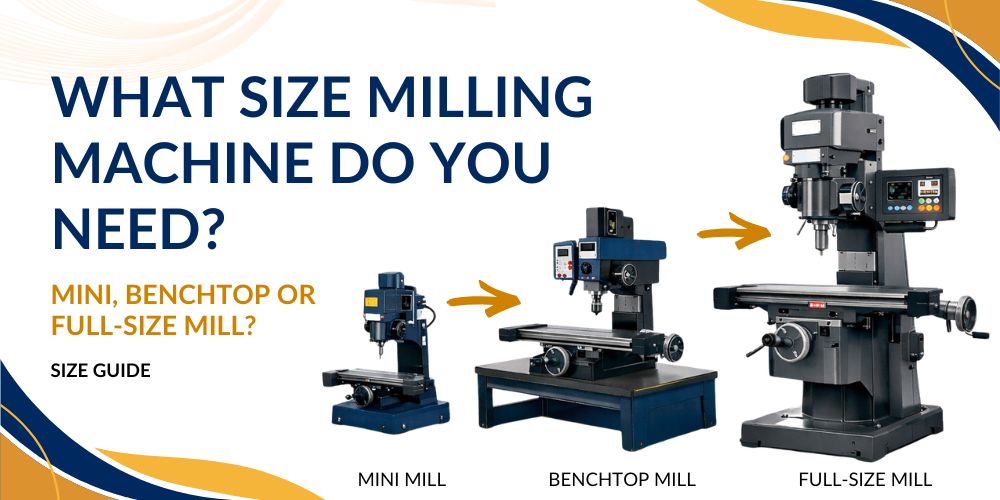
Choosing the right milling machine size is one of the most important decisions when setting up a small workshop. The size you choose affects the type of projects you can handle, the materials you can machine, and the level of precision you can achieve over time.
Choosing the wrong size is one of the most common and costly mistakes beginners make.
Quick Answer: Choosing the Right Milling Machine Size
Small parts and light materials are best handled by micro or mini mills. Medium-sized parts and general workshop tasks typically require a benchtop milling machine. Larger components or heavy-duty work demand a full-size milling machine.
Workshop Type → Recommended Machine Size
| Workshop Type | Recommended Machine Size |
|---|---|
| Hobby / DIY | Micro / Mini Mill |
| Small Workshop | Benchtop Milling Machine |
| Production / Heavy Use | Full-Size Milling Machine |
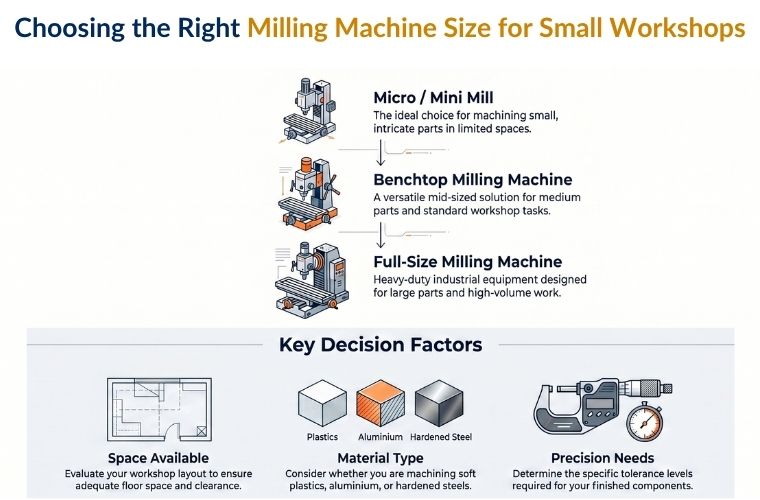
What Size Milling Machine Do I Need?
Selecting the right size depends on how you plan to use the machine in your workshop.
Based on Part Size
- Small parts (under 6 inches) → Micro or mini mill
- Medium parts (6–12 inches) → Benchtop mill
- Larger parts → Full-size machine
Choosing a machine with sufficient travel helps avoid repositioning and improves workflow efficiency.
Based on Material
- Aluminum, brass, plastics → Smaller machines work well
- Steel and harder metals → Require higher rigidity and power
Many beginners wonder if a mini mill is enough for steel, but material hardness plays a major role in machine selection.
Based on Workspace
- Limited space → Micro or benchtop mill
- Dedicated workshop → Larger machines possible
A common mistake is choosing a machine that does not fit comfortably within your available space.
Many users explore different types of micro milling machines to better understand how size affects performance across various applications.
Is a Mini Mill Enough for Metal?
Mini mills are suitable for light machining tasks and smaller components.
They work well for:
- Aluminum
- Brass
- Plastics
- Light-duty steel work
However, limitations include:
- Lower rigidity
- Reduced cutting depth
- Slower material removal
Understanding how different machines perform in real workshop conditions helps in evaluating whether a mini mill will meet long-term needs.
Comparing a mini mill and a drill press highlights differences in rigidity, precision, and metal cutting capability, which can help determine the right tool for your projects.
Benchtop vs Full Size Milling Machine
| Feature | Benchtop Mill | Full Size Mill |
|---|---|---|
| Size | Compact | Large |
| Power | Moderate | High |
| Accuracy | Good | Very High |
| Space Required | Low | High |
Benchtop machines are ideal for compact workspaces, while full-size machines are better suited for large-scale machining and production work.
How Big of a Milling Machine Should I Buy?
Choosing the right size depends on balancing current needs with future requirements.
Consider:
- Budget constraints
- Project complexity
- Material types
- Future scalability
Use this quick checklist to choose the right milling machine size based on your workshop needs.
How to Choose the Right Milling Machine Size (Quick Checklist)
Use this quick checklist to determine the right milling machine size for your workshop:
- Choose a micro or mini mill if you mainly work with small parts
- Select a benchtop mill for medium-sized projects and general use
- Consider a full-size machine for large parts or heavy-duty machining
- Ensure your workspace can comfortably accommodate the machine
- Plan for future upgrades if your projects may grow
Key Factors That Determine Machine Size
-
Table Size and Travel
Table size and axis travel define the working envelope of the machine. Larger travel allows greater flexibility.
-
Spindle Power
Higher spindle power improves cutting performance, especially when working with harder materials.
-
Machine Rigidity
A rigid structure minimizes vibration and improves surface finish and accuracy.
-
Material Type
Different materials require different levels of cutting force, which directly impacts machine size selection.
Common Mistakes When Choosing Milling Machine Size
Avoid these common errors:
- Choosing a machine that is too small
- Ignoring material requirements
- Underestimating future project needs
A common mistake is selecting based only on current needs without considering future upgrades.
Choosing the Right Milling Machine for Your Workshop
Selecting the right machine comes down to balancing size, capability, and available space.
Reviewing compact CNC setups can also help in understanding how automation and machine size work together in small workshop environments.
Conclusion
Choosing the right milling machine size is not just about fitting it into your workshop. It’s about ensuring the machine can handle your materials, maintain precision, and support your future projects.
A well-matched machine improves efficiency, accuracy, and long-term usability. For those building or upgrading a workshop, selecting the right size is a decision that directly impacts machining results.
TAIG Tools offers precision milling solutions designed for both small workshops and advanced machining needs.
