
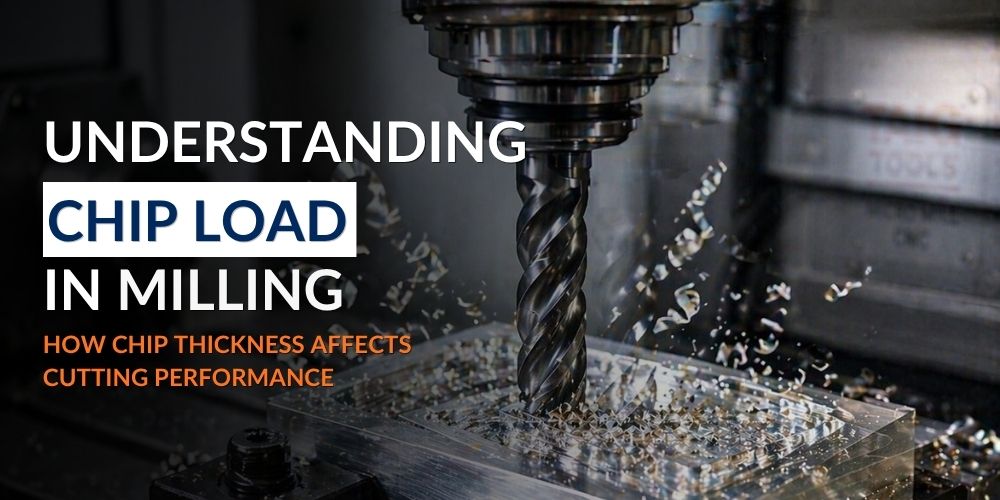
Choosing the right cutting parameters is essential for achieving accurate and efficient machining results. One of the most important yet often misunderstood factors is chip load. Understanding chip load in milling helps machinists improve tool life, surface finish, and overall cutting performance, especially when working with small machines.
In compact workshops and micro machining setups, proper chip load becomes even more critical. Small machines require balanced cutting conditions to avoid tool damage and maintain precision.
Quick Answer: What Is Chip Load in Milling?
Chip load is the thickness of material removed by each cutting edge of a milling tool during one revolution. It is determined by feed rate, spindle speed, and the number of flutes, all of which are part of milling cutting parameters, and it directly affects cutting efficiency, tool life, and surface finish in milling operations.
What Is Chip Load in Milling? (Simple Explanation)
Chip load refers to how much material each tooth of a cutting tool removes as it rotates. You can think of it as the “bite” each tooth takes during machining.
If the chip load is too high, the tool takes a larger bite and may struggle. If it is too low, the tool may rub instead of cutting properly. This balance is influenced by feed rate and spindle speed, making chip thickness machining a key part of milling performance.
Chip Load Formula and How to Calculate It
Chip load can be calculated using a simple relationship between feed rate, spindle speed, and tool geometry.
Chip Load = Feed Rate ÷ (RPM × Number of Flutes)
This formula helps determine how much material each cutting edge removes during rotation.
Example Calculation (Beginner-Friendly)
If your machine is running at:
- Feed Rate = 100 mm/min
- Spindle Speed = 2000 RPM
- Tool = 2 flutes
Then:
Chip Load = 100 ÷ (2000 × 2) = 0.025 mm per tooth
This means each tooth removes a very small amount of material per pass.
Parameter vs Chip Load Effect
| Parameter | Effect on Chip Load |
|---|---|
| Feed Rate | Increases chip load |
| RPM | Decreases chip load |
| Flutes | Reduces load per tooth |
Why Chip Load Is Important in Milling?
Chip load directly controls how effectively a cutting tool removes material. It influences several key machining outcomes:
- Tool life: Proper chip load reduces wear and prevents breakage
- Surface finish: Balanced cutting produces smoother results
- Heat generation: Correct chip formation carries heat away
- Cutting efficiency: Improves material removal without overload
Many beginners focus only on spindle speed, but chip load is what actually determines how the tool cuts the material.
What Happens If Chip Load Is Too High or Too Low?
Chip Load Too High
- Increased cutting forces
- Tool breakage
- Machine vibration
- Rough surface finish
Chip Load Too Low
- Tool rubbing instead of cutting
- Heat buildup
- Premature tool wear
- Poor chip evacuation
Incorrect chip load is one of the most common reasons for unexpected tool failure in small machining setups.
Chip Load for Small Machines and Micro Milling
Chip load becomes especially important when working with small machines. Micro milling setups typically have lower rigidity compared to larger industrial machines.
Because of this:
- Cutting forces must be controlled carefully
- Lighter chip loads are often required
- Stability plays a critical role in accuracy
In small workshops, balancing chip load helps maintain precision while preventing vibration and tool damage. This is particularly important when working with small end mills and detailed components on compact milling machines.
Chip Load vs Feed Per Tooth in Milling
Chip load and feed per tooth refer to the same concept. Both describe the amount of material removed by each cutting edge during rotation.
The term “feed per tooth milling” is often used interchangeably with chip load, especially in machining calculations and tooling recommendations.
How Chip Load Affects Surface Finish?
Chip load has a direct impact on surface quality:
- High chip load → rough and uneven finish
- Low chip load → rubbing or burnishing effect
Maintaining the correct balance ensures smooth surfaces while preventing unnecessary tool wear in precision machining work. In small workshop machining, surface finish is often a clear indicator of proper cutting parameters.
Common Mistakes When Setting Chip Load
Many machining issues come from incorrect chip load settings. Common mistakes include:
- Copying feed and speed charts without adjustment
- Ignoring material differences
- Using incorrect spindle speed
- Applying the same settings to all tools
Understanding milling cutting parameters helps avoid these problems and improves consistency.
How to Choose the Right Chip Load?
Selecting the correct chip load depends on multiple factors:
- Material: Softer materials allow higher chip load
- Tool size: Smaller tools require lighter cuts
- Machine capability: Less rigid machines need conservative settings
A balanced approach ensures efficient cutting while protecting both the tool and the machine.
Conclusion
Chip load plays a critical role in milling performance, affecting everything from tool life to surface finish. Understanding how to calculate and adjust chip load allows machinists to achieve better results, especially in small workshop environments.
For consistent accuracy and reliable machining performance, it is important to match cutting parameters with machine capability and tooling.
Explore precision milling solutions at TAIG Tools designed for accurate and reliable machining in small workshop environments.
FAQ
What is chip load in milling?
Chip load is the amount of material removed by each cutting edge of a milling tool during one revolution.
How do you calculate chip load?
Chip load is calculated using the formula: feed rate divided by the product of RPM and number of flutes.
Why is chip load important?
It affects tool life, surface finish, heat generation, and overall cutting efficiency.
What happens if chip load is too high?
High chip load can cause tool breakage, vibration, and poor surface finish.
What is feed per tooth in milling?
Feed per tooth is another term for chip load and represents the material removed by each cutting edge.
