
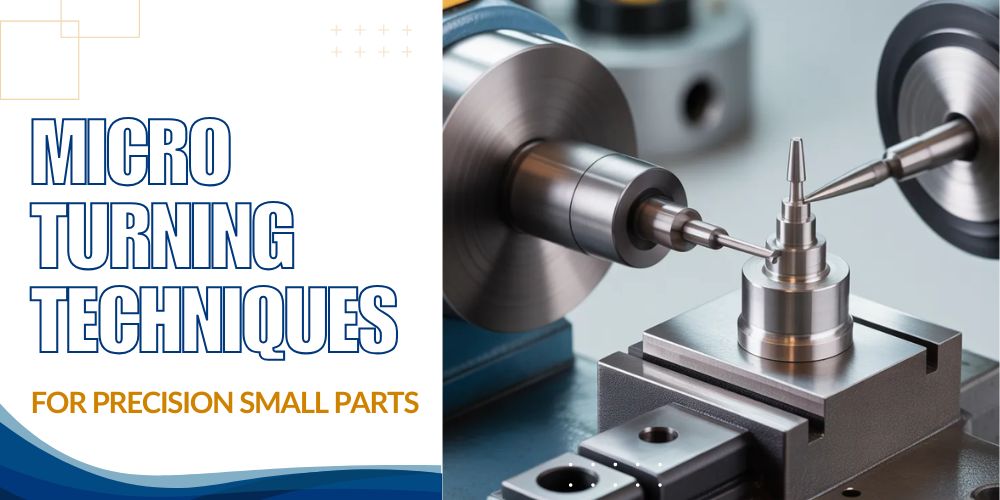
Micro-turning plays a crucial role in producing small, accurate components where detail and consistency are paramount.
On a desktop lathe, this process helps machinists, engineers, and hobbyists make precise parts. It does this without needing the space or power of big industrial machines. When done right, micro turning provides tight tolerances, smooth finishes, and consistent results. This supports many small part uses.
Understanding Micro Turning for Small Part Manufacturing
Micro turning means making minuscule parts and details on a lathe. It uses light cutting forces and precise tool control. People often use this process for parts measured in millimeters or inches. Even small changes or tool wear can affect accuracy.
At this scale, tool geometry and sharpness become critical. A properly shaped cutting edge reduces cutting pressure and helps maintain stable contact with the workpiece.
Tool selection has a direct impact on dimensional control, surface finish, and tool life. For small part manufacturing, consistency is often more important than removal rate, making careful technique essential.
Choosing the Right Cutting Tool Material
Tool material selection has a strong influence on performance in micro turning. High-speed steel tools offer toughness and ease of sharpening, making them useful for softer materials and fine finishing passes.
Carbide tools last longer and resist wear better. This is useful for machining harder alloys or for longer production runs. For small diameters, sharp edges matter more than brute strength. A well-prepared cutting edge reduces cutting forces and lowers the risk of chatter or tool breakage.
Tool Geometry for Small-Diameter Turning
Geometry plays a central role in precision turning techniques. Positive rake angles reduce cutting pressure and improve chip flow. Adequate clearance prevents rubbing that can damage the surface finish. A small nose radius helps maintain dimensional accuracy while still supporting smooth finishes.
Good tool positioning and basic geometry are key for a solid micro lathe setup. Learning these basics early helps ensure stable cutting and safe operation.
Workholding and Setup for Tiny Parts
Secure workholding is essential when machining precision small parts. Even slight movement or runout can cause taper, poor finish, or tool chatter. Collets often provide better concentricity than standard chucks, especially for round stock under small diameters.
Minimizing overhang improves rigidity and keeps cutting forces predictable. Short setups reduce leverage on the spindle and improve repeatability during multiple passes.
Selecting Collets and Chucks for Micro Parts
Collets offer uniform clamping pressure and excellent concentricity, making them ideal for small-diameter turning. Choosing the correct size ensures full contact and reduces distortion of thin parts. For slightly larger components, precision chucks with minimal runout can also provide reliable holding.
Aligning the Workpiece for Accurate Turning
Alignment begins with proper tailstock positioning and center support when required. Misalignment introduces taper and uneven cutting loads. Verifying center height and checking axial alignment before machining prevents cumulative errors during finishing passes.
Controlling Deflection and Vibration in Micro Turning
Deflection limits accuracy more than any other factor in micro machining. Small tools and slender workpieces are sensitive to bending under cutting loads. Machine rigidity, tool length, and cutting depth must be carefully balanced to maintain control.
Shallow cuts reduce pressure and stabilize the cutting process. Maintaining short tool overhang and firm support helps preserve surface quality and dimensional accuracy.
Reducing Tool and Workpiece Deflection
Keeping tools as short as practical improves stiffness. Supporting long parts with a tailstock or steady rest prevents bending. Light cuts with steady feeds reduce the chance of chatter and improve finish consistency.
Managing Cutting Forces on Small Diameters
Lower cutting forces protect both tool and workpiece. Controlled depths of cut and moderate feed rates prevent sudden load changes. Stable cutting keeps the tool engaged smoothly and improves repeatability.
Achieving Fine Surface Finish on Small Turned Parts
Surface finish influences both appearance and function. Poor finishes can affect fit, sealing, and fatigue life. Achieving fine finishes on a desktop lathe depends on speed control, tool sharpness, and consistent cutting conditions.
Higher spindle speeds often improve finish when paired with light feeds. Sharp tools produce a cleaner shearing action that leaves minimal tool marks.
Selecting Speeds and Feeds for Micro Turning
High rotational speed combined with steady feed helps maintain constant chip formation. Too slow a speed can cause tearing, while excessive feed may overload small tools. Balanced parameters improve tool life and surface quality.
Finishing Pass Techniques for Precision Results
Light finishing passes remove minimal material while refining the surface. Spring passes compensate for elastic deflection and stabilize final dimensions. Careful approach speeds reduce tool marks and preserve edge quality.
Many precision machining principles in micro turning also apply to micro milling, especially when surface quality and tight tolerances are critical. Learn more about how similar precision techniques are applied in micro milling in precision machining with micro milling.
Common Mistakes in Micro Turning and How to Avoid Them
Even experienced machinists encounter challenges when working at a small scale. Understanding common errors helps maintain accuracy and reduce scrap.
Excessive Tool Overhang and Poor Support
A long overhang increases leverage and vibration. This leads to chatter, taper, and rough finishes. Keeping setups compact improves rigidity and stability.
Incorrect Tool Geometry and Dull Edges
Worn or poorly shaped tools rub instead of cutting. This raises the temperature and degrades the surface finish. Regular inspection and sharpening maintain cutting efficiency.
Aggressive Cutting Parameters
Heavy cuts and low-speed settings overload small tools. This increases breakage risk and degrades accuracy. Light cuts with controlled feeds provide better long-term results.
Practical Applications for Micro-Turned Components
Micro turning supports a wide range of applications. Prototyping labs use it for testing components and research assemblies. Instrument makers rely on it for precision shafts and bushings. Small production shops create connectors, pins, and fasteners where consistent tolerances are required.
In all cases, a reliable technique ensures repeatable results and efficient production.
Conclusion
Micro turning on a desktop lathe requires careful attention to tool geometry, workholding, cutting forces, and finishing methods. By controlling deflection, selecting proper tools, and using stable cutting strategies, machinists can produce precision small parts with confidence and consistency.
For those creating precision setups and improving turning techniques, Taig Tools is a useful resource. They offer reliable micro lathes, accessories, and machining solutions for making accurate small parts.
