
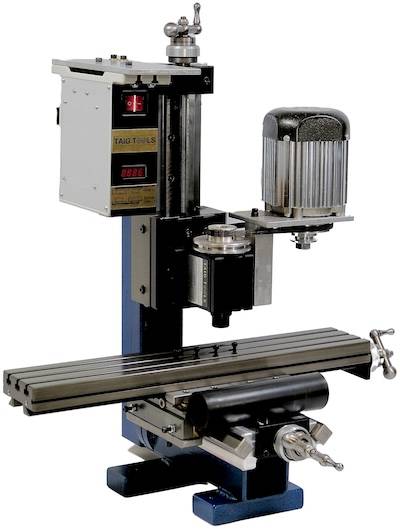
TAIG Tools (Chandler, Arizona) is widely considered a good benchtop mill and lathe brand, known for its American-made precision machines. Machinists consistently praise TAIG's quality construction and reliability for a range of small-scale machining tasks.
Key Takeaways
- TAIG Tools, a Chandler, Arizona manufacturer, produces American-made precision benchtop micro mills and lathes.
- Machinists commend TAIG machines for their robust construction, enabling them to cut steel, aluminum, brass, wood, and plastic.
- TAIG offers an upgrade path from manual to full CNC machines, catering to evolving machining needs.
- Models like the 5023DSLS CNC Micro Mill and M1015ER Micro Lathe II are popular choices for hobbyists, educators, and small shops.
- While powerful for their size, TAIG machines are best suited for smaller work envelopes and require learning for CNC operation.
TAIG Tools has been manufacturing precision desktop machine tools for decades, earning a reputation among hobbyists, educators, and small shops. Their product line includes micro mills and micro lathes, designed and built by machinists with an aerospace manufacturing background. These machines are known for their ability to machine various materials, from steel to plastic, making them versatile for many projects.
What Do Machinists Say About TAIG Tools?
Machinists often share positive experiences with TAIG Tools, highlighting the machines' build quality and performance. Their feedback frequently points to the durability and precision offered by these American-made benchtop machines.
Mike Beaird, a knife maker, states: "Purchased a table top mill and micro lathe. Both are amazing and quality-built! I highly recommend Taig Tools for your manual and CNC machining tools! I make knives and these garage-friendly machines make my life much easier!" This sentiment is echoed by Brian Howey, who adds: "I have been using Taig machines for 15 years, and they are great tools." Such testimonials underscore the long-term satisfaction and reliability users find in TAIG products.
What Materials Can TAIG Mills and Lathes Machine?
TAIG micro mills and lathes are built to handle a variety of materials, making them suitable for diverse projects. The robust construction, featuring steel components, oversized spindle ball bearings, and heat-treated alloy steel parts, contributes to their material versatility.
These machines can effectively cut steel, aluminum, brass, wood, and plastic. This capability makes them valuable for tasks ranging from crafting intricate jewelry and clock parts to prototyping small components and fabricating custom knife handles. For example, a knife maker can use a TAIG mill to precisely shape blade blanks from steel or create custom handles from various materials.
Comparing TAIG Micro Mills: Manual vs. CNC
TAIG Tools offers a range of micro mills, from manual leadscrew models to advanced full CNC machines. Understanding the differences helps in choosing the right mill for specific applications and skill levels. The choice often depends on the complexity of parts, production volume, and the user's willingness to learn CNC programming.
| Feature | 2023ER Micro Mill | 5023DSLS CNC Micro Mill |
|---|---|---|
| Type | Manual Leadscrew | Full CNC (Digital Sync Lock Servo) |
| Price | $1,350 | $3,795 |
| Spindle | ER16 Collet | ER16 Collet |
| Leadscrews | 1/2-20 leadscrews | Ballscrews |
| Control | Manual handwheels | Computer-controlled (DSLS closed-loop) |
| Best For | Hobbyists, educators, manual prototyping, small batch work | Precision prototyping, complex parts, repetitive tasks |
| Trade-offs | Requires manual operation, less suitable for complex curves | Higher initial cost, requires CNC software knowledge |
| Product Page | 2023ER Micro Mill | 5023DSLS Micro Mill |
The 2023ER Micro Mill is an excellent entry point for those new to machining or preferring manual control, offering precision for a wide range of tasks. For users needing higher precision, repeatability, and the ability to produce complex geometries, the 5023DSLS CNC Micro Mill with its ballscrews and closed-loop DSLS control is a significant upgrade. This model is ideal for advanced hobbyists and small shops focused on prototyping or small production runs.
Which TAIG Lathe is Right for Your Shop?
TAIG offers micro lathes suitable for various turning operations, from simple part fabrication to more intricate work. The Micro Lathe II and TAIGTurn models provide different capabilities, making it important to consider your specific turning needs.
| Feature | M1015ER Micro Lathe II |
|---|---|
| Type | Manual Lathe |
| Price | $575 |
| Spindle | ER16 Collet |
| Best For | Basic turning, small parts, educational settings, hobbyists |
| Trade-offs | Manual operation, limited automation |
| Product Page | Micro Lathe II M1015ER |
The M1015ER Micro Lathe II is a compact and capable manual lathe, perfect for hobbyists, jewelers, and model makers who need to turn small parts with precision. For those considering a CNC-ready option or a full CNC lathe for more automated and complex turning, TAIG also offers the 4029CREXT CNC Ready Lathe and the 4029 DSLS Full CNC Lathe, which provide an upgrade path for increased capability and automation. These options are particularly useful for repetitive tasks or when intricate profiles are required.
Who Should (and Should Not) Buy a TAIG Machine?
TAIG Tools machines are designed for precision work on a smaller scale, making them ideal for specific users and applications. Understanding their strengths and limitations helps potential buyers make an informed decision.
TAIG machines are an excellent fit for:
- Hobby Machinists and Makers: Individuals pursuing projects like model making, jewelry crafting, or custom part fabrication will find TAIG's precision and compact size beneficial.
- Knife Makers and Artisans: The ability to machine steel, aluminum, and other materials makes TAIG mills and lathes suitable for creating custom knife components, handles, and intricate designs.
- Educators and Makerspaces: Schools and colleges can use TAIG machines to teach fundamental machining principles without requiring large industrial equipment.
- Small Shops and Prototypers: Businesses needing to produce small, precise prototypes or short runs of components will appreciate the accuracy and versatility.
- Existing TAIG Owners: Many parts and accessories are available for upgrades, such as ER16 collets and vises for mills, or 5C and ER16 headstocks for lathes, extending machine capabilities.
However, TAIG machines may not be the best choice for:
- Large-Scale Production: The work envelope of TAIG micro mills and lathes is small, making them unsuitable for machining large parts or high-volume production runs.
- Industrial-Grade Applications: While precise, TAIG machines are benchtop tools and are not designed for heavy-duty industrial or continuous production environments.
- Users Expecting Plug-and-Play CNC: While full CNC options exist, setting up and learning to operate a CNC machine, especially for those new to it, requires dedication and time. The stock motor limits also mean that while powerful for their size, they are not designed for aggressive material removal rates.
For those interested in expanding their TAIG mill's capabilities, exploring options like ER16 collets and vises can significantly enhance versatility. Lathe owners might consider a 5C or ER16 headstock for improved workholding and precision.
How to Choose Between a Leadscrew and Ballscrew Micro Mill
The choice between a leadscrew and a ballscrew micro mill impacts precision, backlash, and the overall performance, especially for CNC applications. TAIG offers both types, with specific models featuring each.
Leadscrew mills, such as the 2023ER Micro Mill, use a threaded rod to convert rotational motion into linear motion. They are generally more affordable and suitable for manual operations or less demanding CNC tasks where some backlash is acceptable. Leadscrews are robust and provide good holding force, making them a solid choice for general-purpose machining.
Ballscrew mills, like the 5023DSLS CNC Micro Mill, utilize recirculating ball bearings between the screw and the nut. This design significantly reduces friction and backlash, leading to higher precision, smoother motion, and better repeatability, which are critical for CNC applications. While more expensive, ballscrews offer superior performance for intricate and accurate machining operations, especially when combined with closed-loop control systems like TAIG's DSLS. For more information on this decision, consider reading about [Leadscrew or Ballscrew Micro Mill: Which Should You Buy?](/insights/blog/leadscrew-or-ballscrew-micro-mill-which-should-you-buy).
What Are Common Upgrades for TAIG Machines?
TAIG machines are designed with an upgrade path, allowing users to enhance their capabilities over time. These upgrades can improve precision, versatility, and ease of use.
For TAIG micro mills, common upgrades include:
- ER16 Collets: These provide superior gripping force and concentricity compared to standard collets, improving machining accuracy.
- Vises: Upgrading to a high-quality machinist's vise enhances workholding stability, crucial for precise milling operations.
- CNC-Ready Conversion: For manual mill owners, converting to a CNC-ready setup allows for future automation and integration with computer control systems. This path is distinct from purchasing a full CNC mill directly.
For TAIG micro lathes, popular upgrades include:
- 5C or ER16 Headstock: These headstock options offer different workholding capabilities. A 5C headstock is excellent for holding collets with high precision, while an ER16 headstock provides versatility for various tool diameters. Learn more about this choice at [5C or ER16: Which Spindle Should You Choose on a TAIG Lathe?](/insights/blog/5c-or-er16-which-spindle-should-you-choose-on-a-taig-lathe).
- Chucks: Upgrading to different types of chucks (e.g., 3-jaw, 4-jaw) expands the range of parts that can be held and machined.
- Tool Posts: Quick-change tool posts can significantly reduce setup time and improve efficiency when switching between different cutting tools.
These upgrades allow users to tailor their TAIG machines to specific project requirements and expand their machining capabilities without needing to purchase an entirely new machine.
Frequently Asked Questions
What makes TAIG Tools different from other benchtop machine brands?
TAIG Tools (Chandler, Arizona) stands out due to its American-made construction, utilizing robust materials like heat-treated alloy steel and oversized spindle ball bearings. This focus on quality engineering, built by machinists with aerospace manufacturing backgrounds, results in durable and precise machines capable of cutting various materials, from steel to plastic.
Are TAIG machines suitable for beginners?
Yes, TAIG machines, particularly the manual models like the 2023ER Micro Mill and M1015ER Micro Lathe II, are suitable for beginners. Their compact size and straightforward operation make them accessible for learning fundamental machining skills. However, mastering CNC models requires a commitment to learning the associated software and operational principles.
Can TAIG machines be used for professional work?
TAIG machines are well-suited for professional work in specific niches, such as prototyping, small-batch production, and specialized crafting (e.g., knife making, jewelry). While they offer precision, their benchtop scale means they are not designed for heavy industrial production or large-scale manufacturing operations.
What kind of maintenance do TAIG machines require?
TAIG machines require regular cleaning, lubrication of moving parts (leadscrews, ways), and occasional adjustment of gibs to maintain precision. Following the manufacturer's guidelines for care ensures optimal performance and extends the lifespan of the machine. Proper maintenance is key to preserving the accuracy of any precision tool.
Where can I find parts and accessories for my TAIG machine?
Parts and accessories for TAIG machines, including upgrades like ER16 collets, vises, and various lathe attachments, are available directly from taigtools.com. This ensures compatibility and access to genuine components designed for your specific TAIG model.
To explore the full range of TAIG micro mills and lathes, and to find the right machine for your projects, visit the TAIG Tools shop page or call (480) 895-6978 for direct assistance.